

Introduction :
Neighborhood Recycling or Composting Initiative in Nigeria
Waste management is one of the biggest environmental challenges facing Nigerian communities today. From overflowing gutters in Lagos to informal dumpsites in growing districts of Abuja and roadside waste burning in Port Harcourt, improper disposal affects health, safety, and quality of life.
But real change does not always start at the government level.
It can begin on your street.
Starting a neighborhood recycling or composting initiative is one of the most practical ways to reduce waste, improve sanitation, and build community cooperation.
With thoughtful planning and shared responsibility, Nigerian neighborhoods can significantly reduce landfill waste and create cleaner, healthier environments.
This comprehensive guide walks you through everything you need to know.
Why Recycling and Composting Matter in Nigerian Communities
Nigeria generates millions of tons of waste annually, much of which ends up in:
-
Open dumpsites
-
Drainage systems
-
Roadside piles
-
Burn pits
Improper waste disposal contributes to:
-
Flooding (blocked gutters)
-
Air pollution (waste burning)
-
Disease outbreaks
-
Rodent and insect infestations
-
Environmental degradation
Neighborhood recycling and composting initiatives help:
-
Reduce landfill waste
-
Improve drainage systems
-
Minimize harmful burning
-
Promote environmental awareness
-
Turn waste into useful resources
Instead of seeing waste as a problem, communities can view it as an opportunity.
Understanding the Difference: Recycling vs Composting
Before starting, it is important to understand the two main approaches.
Recycling
Recycling involves collecting and processing materials such as:
-
Plastic bottles
-
Glass containers
-
Paper and cardboard
-
Metal cans
These materials are sent to recycling centers where they are transformed into new products.
Composting
Composting involves breaking down organic waste like:
-
Food scraps
-
Fruit peels
-
Vegetable remains
-
Leaves and grass
-
Eggshells
The result is nutrient-rich compost that can be used for:
-
Community gardens
-
Landscaping
-
Tree planting
-
Lawn care
Both methods can operate together within a single initiative.
Step 1: Start With Awareness and Conversation
Every successful community project begins with dialogue.
Talk to your neighbors.
Use:
-
Casual conversations
-
Estate meetings
-
Religious gatherings
-
WhatsApp groups
-
School PTA meetings
Explain:
-
The environmental problem
-
The health risks
-
The benefits of recycling and composting
-
The simplicity of starting small
You don’t need the whole neighborhood at first. Even five committed households are enough to begin.
Step 2: Assess Your Community’s Waste Profile
Understanding the type of waste generated helps determine the best strategy.
Ask:
-
What type of waste is most common?
-
Is plastic waste visible on the streets?
-
Is food waste significant?
-
Are gutters frequently blocked?
In many Nigerian households, a large percentage of waste is organic, making composting highly effective.
Conduct a simple one-week waste observation if possible.
Step 3: Form a Small Organizing Committee
Assign roles to prevent confusion.
Suggested roles:
-
Coordinator
-
Awareness lead
-
Collection manager
-
Finance lead (if contributions are required)
-
Volunteer supervisor
Clear leadership increases accountability and sustainability.
Step 4: Decide on the Model
There are several practical models for neighborhood recycling or composting.
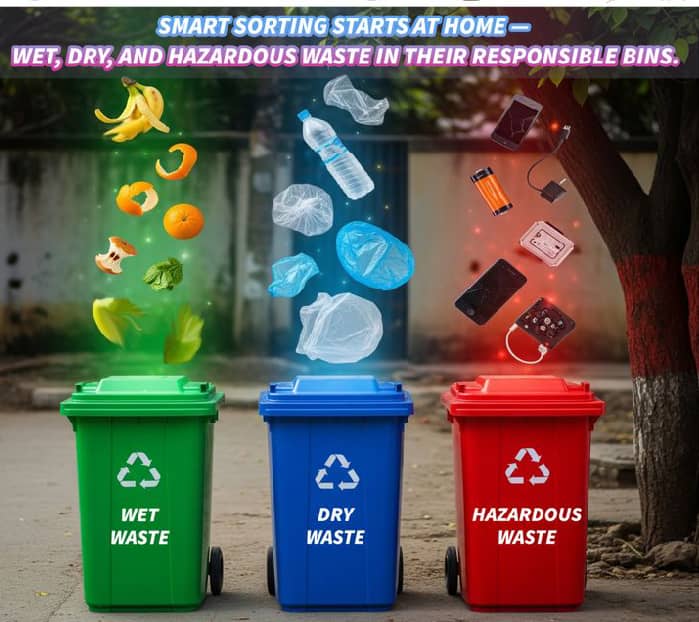
Model A: Household-Level Sorting With Central Collection
Residents sort waste at home into:
-
Recyclables
-
Organic waste
-
General waste
A designated point collects sorted materials weekly.
Model B: Centralized Composting Area
Organic waste is brought to a shared compost pit or compost bin within the community.
Model C: Partnership With Recycling Companies
Partner with local recycling businesses that collect plastic or paper in bulk.
This model works well in urban areas like Lagos where recycling networks are more developed.
Start with what is realistic.
Step 5: Choose a Suitable Location
For composting, select a space that is:
-
Away from direct residential windows
-
Not prone to flooding
-
Accessible to participants
-
Secure from animals
For recycling collection:
-
Use labeled bins
-
Place in visible, accessible areas
-
Ensure regular pickup
Safety and cleanliness are critical.
Step 6: Educate Participants on Proper Waste Separation
Education prevents contamination.
Create simple guidelines:
Recyclables:
-
Rinse bottles before disposal
-
Remove bottle caps if required
-
Flatten cardboard boxes
Compostables:
-
No plastic bags
-
No cooked oily food
-
Avoid meat scraps (to prevent odor)
General Waste:
-
Non-recyclable items
-
Sanitary products
-
Hazardous waste
Simple printed or digital guides help maintain consistency.
Step 7: Set a Collection Schedule
Consistency builds habit.
Decide:
-
Which day recyclables are collected
-
How often compost is turned
-
Who supervises
For example:
-
Recycling collection every Saturday
-
Compost turning every two weeks
Routine makes the initiative predictable.
Step 8: Manage Compost Properly
Successful composting requires balance.
Key principles:
-
Mix green waste (food scraps) with brown waste (dry leaves)
-
Keep compost moist but not soaked
-
Turn pile regularly for aeration
-
Cover to prevent excessive rain
In 6–12 weeks, compost becomes dark, crumbly, and soil-like.
This can be used in:
-
Estate gardens
-
Tree planting projects
-
School landscaping
Step 9: Create Incentives for Participation
Encouragement improves engagement.
Possible incentives:
-
Free compost for participating households
-
Recognition in community meetings
-
“Green Champion” awards
-
Reduced waste disposal fees (if applicable)
Positive reinforcement sustains momentum.
Step 10: Partner With Local Authorities or NGOs
Local government environmental agencies may:
-
Provide bins
-
Offer technical advice
-
Connect communities to recycling partners
Environmental NGOs may support awareness campaigns.
A formal letter from the residents’ association strengthens requests.
Step 11: Track Progress and Impact
Measure success through:
-
Reduced visible waste
-
Fewer blocked gutters
-
Amount of recyclables collected
-
Quantity of compost produced
Visible improvement motivates continued participation.
Common Challenges and Solutions
1. Low Participation
Solution:
-
Start small
-
Share success stories
-
Provide reminders
2. Odor From Compost
Solution:
-
Add more dry materials
-
Turn compost regularly
-
Avoid meat and dairy
3. Contamination of Recyclables
Solution:
-
Clear labeling
-
Ongoing education
-
Regular feedback
4. Funding Constraints
Solution:
-
Small voluntary contributions
-
Partner with recycling buyers
-
Sell compost if surplus exists
Environmental and Health Benefits
A functioning recycling and composting initiative:
-
Reduces air pollution from burning
-
Decreases landfill overflow
-
Prevents drainage blockage
-
Reduces flooding risk
-
Lowers rodent and insect breeding
-
Improves neighborhood cleanliness
Cleaner environments contribute to lower disease risk.
Economic Opportunities
Recycling can create:
-
Income for waste collectors
-
Jobs for sorting and transport
-
Small compost sales
Youth groups can be engaged in collection and management.
Waste management can evolve into micro-enterprise.
The Social Impact of Shared Environmental Action
When neighbors collaborate on environmental projects:
-
Communication improves
-
Trust increases
-
Shared responsibility grows
-
Community pride strengthens
Environmental initiatives often lead to broader neighborhood improvements.
Real Example Scenario
In a residential cluster in Abuja, residents began separating plastic waste and composting organic materials.
Within six months:
-
Drainage blockages reduced
-
Garden soil improved
-
Waste burning stopped
-
Youth volunteers gained small stipends
A simple initiative produced measurable results.
Long-Term Sustainability Strategy
To maintain momentum:
-
Conduct quarterly reviews
-
Rotate leadership roles
-
Expand gradually
-
Introduce school participation
-
Celebrate milestones
Sustainability requires ongoing engagement.
Conclusion
Starting a neighborhood recycling or composting initiative in Nigeria is both practical and impactful.
It improves sanitation, strengthens community bonds, reduces environmental harm, and promotes responsible living.
Change does not require large funding or complex systems.
It begins with awareness.
It grows through cooperation.
It succeeds through consistency.
When neighborhoods take ownership of their waste, they take control of their environment and their future.

